
For enterprise and government organisations, the decision to retain legacy systems is rarely a deliberate technology strategy. It is the accumulated result of deferred architectural investment, procurement constraints, and the operational risk associated with changing systems that critical processes depend on. Over time, this accumulation produces a structural condition: an estate in which legacy architecture constrains integration, limits governance continuity, and introduces systemic risk that compounds with each subsequent year of deferral.
The problem is not that legacy systems are old. It is that they were designed for a fixed operational environment that no longer exists. Regulatory frameworks have expanded. Integration requirements have multiplied. Data governance obligations have increased in scope and specificity. Legacy architecture, built before these conditions were fully understood, cannot absorb the demands placed on it without structural workarounds that carry their own cost and risk.
For CIOs and CTOs managing complex, regulated estates, the question is not whether to modernise. It is how to do so without compromising the compliance continuity, integration stability, and operational integrity that the organisation depends on during the transition.
How Legacy Architecture Manifests in Regulated Environments
In regulated industries, the structural consequences of legacy architecture are most visible at the points where compliance, integration, and operational continuity intersect.
Legacy systems were typically designed as self-contained platforms, with data models, access controls, and processing logic that assumed a fixed set of inputs and outputs. As the surrounding estate has evolved, these systems have been connected to newer platforms through bespoke, point-to-point integrations that were not designed for ongoing maintainability. The result is an integration layer that is fragile, poorly documented, and increasingly difficult to govern.
In this environment:
- Compliance reporting depends on data that must be manually reconciled across systems with inconsistent validation rules and data structures.
- Audit trails are incomplete at system boundaries, where data moves between platforms through integrations that do not log transactions in a standardised, auditable format.
- Security posture is degraded by platforms that are no longer supported by vendors, cannot receive current security patches, and expose attack surfaces that modern architectures are designed to eliminate.
- Operational continuity is maintained through manual processes and institutional knowledge rather than governed, documented system behaviour.
These conditions are not incidental. They are structural, and they do not improve incrementally. They deteriorate as the gap between legacy architecture and current operational requirements continues to widen.
Related Reading: 5 Clear Signs You Need to Modernise Your Legacy Systems
The Structural Implications for Integration, Governance, and Scalability
The systemic risk associated with legacy architecture in complex estates operates across four interconnected dimensions.
Integration fragility. Point-to-point integrations built to connect legacy systems with newer platforms create a brittle integration layer where every system change risks downstream failure. There are no standardised interfaces to absorb change at the boundary. When a legacy system is modified, or when a connected platform is updated, the integration must be re-engineered manually. This produces a maintenance burden that escalates as the estate grows, and an integration risk that increases with each additional connection.
Governance discontinuity. Legacy systems were not designed to support the data governance requirements of current regulatory frameworks. Access controls may not meet current standards. Audit logging may be incomplete or non-existent. Data retention and disposal policies may be impossible to enforce consistently across a legacy platform. The consequence is a governance gap that must be managed through compensating controls, manual oversight, and periodic remediation. None of these provide the structural governance continuity that regulated environments require.
Scalability constraints. Legacy architectures are designed for fixed operational baselines. When service demand increases, when a legislative mandate expands an agency's operational scope, or when an acquisition introduces new data volumes and system dependencies, legacy architecture cannot absorb the change without significant re-engineering. The organisation is forced to choose between operational risk and capital expenditure on a system that remains structurally limited after the investment.
Stranded investment risk. Every compensating control, manual process, and bespoke integration built to extend the life of a legacy system represents investment in a depreciating architectural asset. As the legacy platform approaches end-of-life, this investment cannot be recovered. The organisation carries both the cost of the compensating infrastructure and the eventual cost of replacement.
Governance and Security Continuity During Modernisation
The risks associated with legacy architecture do not pause during a modernisation programme. Compliance obligations apply to the estate as it exists throughout the transition, not only to the target architecture. Organisations that approach modernisation as a binary transition from pre-modernisation to post-modernisation state typically find that governance continuity is the first casualty of the process.
A governed modernisation approach addresses this by treating compliance and security as continuous requirements, not transition milestones. This means:
- Access controls and audit logging are maintained at every stage of the migration, with no period in which the estate operates outside its compliance boundary.
- Security posture is managed continuously, with legacy platforms decommissioned on a schedule that ensures no gap between the withdrawal of legacy security controls and the activation of their replacements.
- Data governance obligations, including data sovereignty, retention, and access rights, are enforced throughout the migration rather than retrospectively applied to the target architecture.
- Integration points are documented and governed at each phase, so that the compliance status of data flows is maintained as systems are introduced, reconfigured, or retired.
For government agencies and regulated industries working to achieve compliance under legislated timelines, this continuous governance approach is not optional. It is the condition under which modernisation can proceed without creating the compliance exposure it is intended to eliminate.
Related Reading: How to Successfully Complete a Legacy Software Migration
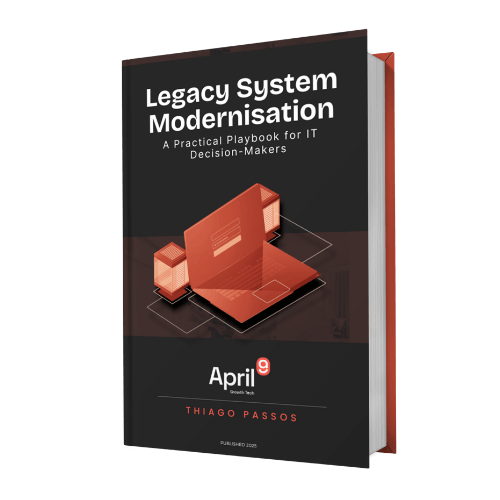
Free Playbook
Legacy System Modernisation: A Practical Playbook for IT Decision Makers
Practical frameworks and real-world case studies to help you modernise outdated systems without the usual transformation headaches.
Download the Free PlaybookIntegration Resilience as an Architectural Requirement
The integration challenges associated with legacy modernisation are not resolved by replacing the legacy system. They are resolved by replacing the integration architecture that surrounds it.
Organisations that approach modernisation by replacing individual legacy platforms without addressing the integration layer typically reproduce the same structural problems in a newer technology stack. Point-to-point integrations remain. Governance gaps at system boundaries persist. The estate becomes more modern in component but not in architecture.
API-first integration design addresses this at the structural level. By establishing stable, documented interfaces between systems, the integration layer becomes independent of the platforms it connects. When a legacy system is replaced, the interface remains. When a new platform is introduced, it connects to the existing interface rather than requiring a new bespoke integration. Change is isolated at the component level rather than propagated across the estate.
This architectural approach also supports phased modernisation. Legacy systems can be replaced incrementally, with each replacement contained by stable integration boundaries that protect the surrounding estate from disruption. The organisation maintains operational continuity throughout the transition, with governance and compliance requirements met at each phase rather than deferred to the conclusion of the programme.
Related Reading: Modernise or Replace Legacy Software? How to Choose
Architectural Debt and the Cost of Deferral
The financial case for legacy modernisation is not primarily about the cost of the new system. It is about the hidden costs of continuing to operate the existing one, and the rate at which that cost escalates as deferral continues.
Organisations managing legacy estates accumulate architectural debt through several compounding mechanisms:
- Vendor support withdrawal requires the organisation to fund its own support capability or to operate on unsupported platforms with the security and compliance risk that entails.
- Compensating controls, including manual processes, parallel systems, and bespoke integrations, carry ongoing operational cost that is not recovered when the legacy platform is eventually replaced.
- Compliance remediation costs increase as the gap between legacy system capability and current regulatory requirements widens, requiring more extensive and disruptive intervention at each audit cycle.
- Talent costs escalate as specialist knowledge of legacy platforms becomes scarcer and more expensive to retain or procure.
Modernisation does not eliminate these costs immediately, but it stops their accumulation. A governed modernisation programme that replaces legacy architecture with a maintainable, integration-safe estate converts an escalating cost structure into a stable one, and eliminates the stranded investment risk that accumulates with each year of further deferral.
Case Study: Supply Chain Modernisation at a Livestock Enterprise
A major livestock enterprise operating across Australia and New Zealand had retained legacy architecture across its supply chain operations as the business expanded into multiple jurisdictions. The consequences were structural: animal processing data held in non-standard formats across file servers and spreadsheets, welfare check records that could not be consolidated for cross-jurisdictional compliance reporting, and manual workflows that introduced error and latency into processes requiring timely, accurate information.
The organisation's integration layer consisted of manual data transfers and ad hoc connections between systems that had been built incrementally over years of operational growth. Compliance reporting across Australian and New Zealand regulatory frameworks required manual reconciliation of data that the architecture could not consolidate automatically.
April9 delivered a structured modernisation programme that addressed the integration and governance failures directly. The engagement replaced fragmented manual workflows with standardised data pipelines, migrated data from non-standard formats into a governed, unified architecture, and integrated directly with government regulatory systems across both jurisdictions. A mobile operations application replaced manual field processes, with data flowing directly into the governed estate rather than through manual entry.
The outcome was an operational architecture capable of supporting ongoing scale across both jurisdictions, with the compliance and audit integrity that the prior estate could not provide and the integration stability that a growing operational footprint requires.
Stack9: Governed Composable Architecture for Legacy Modernisation
April9 delivers legacy modernisation through Stack9, a composable software platform designed for the integration, compliance, and long-term maintainability requirements of enterprise and government organisations.
Stack9 is built around a library of auditable, reusable components that can be assembled, extended, and reconfigured within a controlled development environment. Legacy integration is managed through a standardised API-first architecture that establishes stable interfaces between existing systems and new components, isolating change at the boundary rather than propagating it across the estate. Each integration point is documented. Each component is independently maintainable. Each deployment is traceable.
For organisations operating under IRAP-aligned security requirements or building to ISO 27001 standards, Stack9 provides a security and compliance baseline that is designed into the platform architecture from the outset. Governance controls, access management, and audit capability are structural properties of the platform, not post-implementation additions.
The result is a modernisation path that is controlled, auditable, and designed to absorb the regulatory and operational demands of complex estates over the long term, without the integration fragility or governance discontinuity that characterises unmanaged legacy transition.
Governed Modernisation for Enterprise and Government Complexity
Organisations managing legacy estates under compliance pressure are contending with a structural constraint that does not improve through incremental maintenance or compensating controls. The technical debt accumulated through deferred modernisation continues to compound, and the cost of eventual transition increases with each cycle of deferral.
April9 works with enterprise and government organisations to design and deliver custom software development and governed modernisation programmes that replace legacy architecture with integration-safe, compliance-ready systems. Engagements are structured around the specific integration, governance, and continuity requirements of each estate, with Stack9 providing the composable architectural foundation for controlled transition that maintains compliance and operational integrity throughout. To discuss your organisation's modernisation requirements, contact April9.
Related Reading: Eliminating Vulnerabilities in Digital Transformation